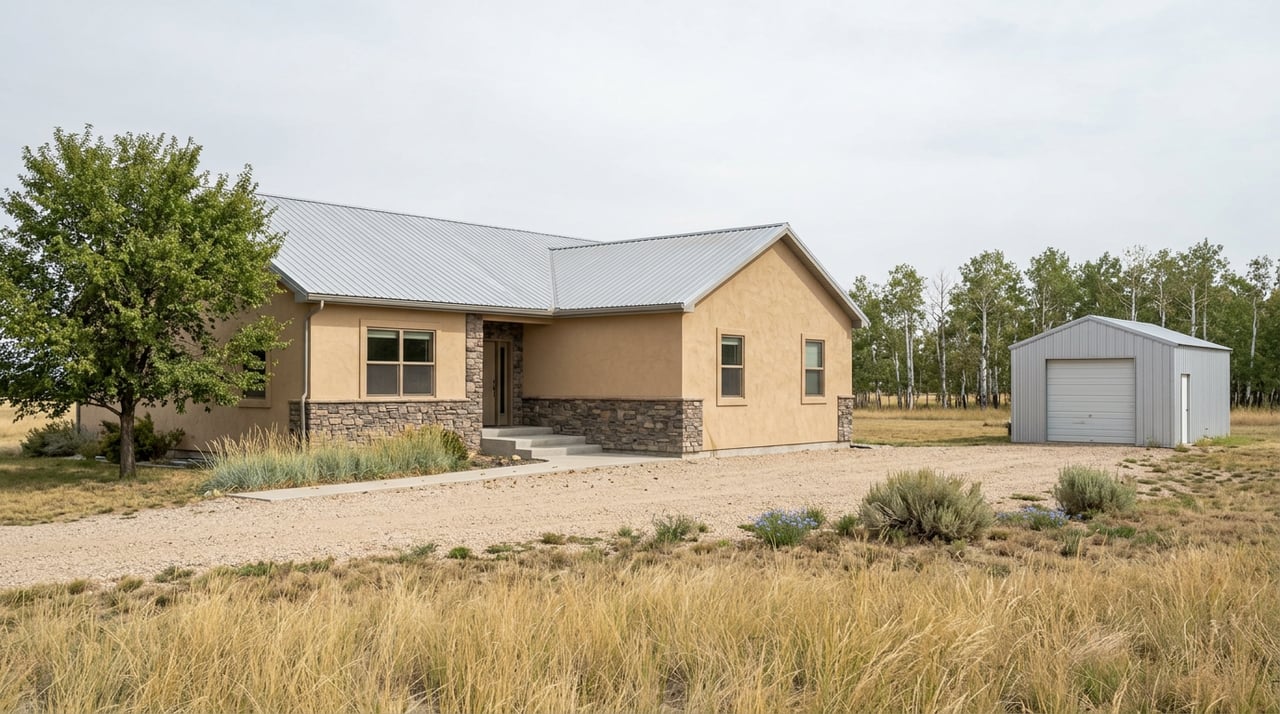
A buyer under contract on ten acres in the Hammett Valley this fall is running a longer timeline than the same purchase would have taken two years ago, and the reason has nothing to do with financing, inspection contingencies, or anything the purchase agreement anticipated. It has to do with snowpack that fell short back in March.
On April 13, 2026, Idaho Department of Water Resources Director Mathew Weaver signed an emergency drought declaration for all 44 counties in the state, and Governor Brad Little approved it the same day. The order followed the second-warmest winter Idaho had recorded since 1896 and a record-low snowpack, with 54 snow course locations and 45 SNOTEL sites in the Snake River Basin reporting the lowest snow-water equivalent values ever measured at those stations. By June, the Idaho Surface Water Coalition, which delivers Snake River water to roughly 550,000 acres of farmland across southern Idaho, was blunt about what that meant on the ground.
"Idaho is in a bad situation. The snow never fell this past winter, so now we are dealing with one of the most challenging water years in generations."
That statement was about irrigation shortfalls, and if you already read our piece on water rights around Glenns Ferry, you know the irrigation-share side of this story. This is a different mechanism entirely. It has nothing to do with whether a canal company can deliver water to a field. It has to do with whether the county health district can approve a septic permit or sign off on a mortgage survey for a house that hasn't been built yet, or a house that's changing hands and needs its well and septic system re-verified before closing.
Two Systems, One Drought, Very Different Exposure
Glenns Ferry itself runs on municipal water and sewer. The city operates its own water treatment plant, and wastewater goes to sewer lagoons the city maintains directly. If you're buying a home inside the city limits, the drought declaration doesn't touch your closing timeline in any direct regulatory sense.
Step outside city limits, into the acreage that makes up most of the surrounding area including Hammett Valley, the King Hill corridor, and subdivisions like Fruitland, and the picture changes. These properties run on private wells and septic systems, and both are regulated not by the city but by Central District Health, the agency that permits septic installations and reviews land development applications for Elmore County out of its office on 8th Street in Mountain Home. That regulatory line, drawn at the city limits, is why the drought declaration creates friction for one kind of Glenns Ferry buyer and not the other.
What Changed at the Permitting Level
Central District Health has posted guidance directly addressing what the April drought declaration means for septic permitting, and it's worth reading closely if you're under contract on anything with acreage this year. Per the Idaho Department of Environmental Quality's Technical Guidance Manual, specifically Section 2.4.5, the state applies stricter scrutiny to groundwater records during a declared drought, and defines an extremely low water year as one where snow-water equivalent falls under 75 percent of normal. Idaho met that threshold statewide in April.
The practical effect is that groundwater monitoring tied to septic site evaluations, the kind that determines whether a parcel's drainfield will stay properly separated from the water table, may need to be repeated in a future year even if it was already completed this year. The logic is straightforward. Regulators want confidence that a septic system will keep the required separation from groundwater during a normal year, not just during an unusually dry one where the water table sits lower than it typically would. If your site evaluation happened during a year the state has formally classified as abnormal, that data point becomes less reliable as proof the system will work under ordinary conditions.
Central District Health's guidance also flags specific monitoring windows property owners should know about if a permit is in process: seasonal runoff monitoring runs from February 15 through June 30, and irrigation water monitoring runs from April 15 through October 31. If a site evaluation or permit application falls inside one of those windows during a declared low water year, expect the health district to look harder at the numbers, and expect that scrutiny can add time.
Where This Actually Shows Up
This isn't an abstract regulatory footnote. It shows up in the kind of properties that make up a real share of what's currently listed around Glenns Ferry. Listings in the Hammett Valley advertise irrigated acreage tied to the King Hill Irrigation District, which has served the King Hill, Glenns Ferry, and Hammett areas out of its office on East First Avenue in Glenns Ferry for generations. Parcels in Fruitland Subdivision and similar county land come up regularly with language about splitting into buildable lots, which means a fresh septic permit application, not just a transfer of an existing one.
Any of those transactions, new construction on raw acreage or resale of a home with an existing system that needs a mortgage survey, now runs through a permitting process operating under drought-year scrutiny. The irrigation water flowing through King Hill Irrigation District's system and the groundwater feeding a private well are two separate resources regulated separately, but both draw on an aquifer system that this year's snowpack failed to replenish at anything close to a normal rate. That's the connective thread. The drought didn't just strain irrigators. It changed the evidentiary bar the health district applies to domestic water and wastewater systems on the same land.
What a Mortgage Survey Actually Checks
If you're buying an existing home on well and septic near Glenns Ferry, your lender will likely require a mortgage survey, which Central District Health performs for Elmore County properties. This isn't the same as a general home inspection. It's a specific look at the wellhead and the septic system, including collection of water samples tested for coliform bacteria, nitrate, and nitrite, to confirm the systems are functioning and safe before the sale closes.
In a normal year, that process runs on a predictable timeline. In a year classified as an extremely low water year, the underlying groundwater data the health district references to evaluate site suitability carries more weight, and if prior monitoring falls short of what the guidance calls for, the survey can take longer to clear than a buyer or seller might expect based on how these transactions have gone in past years.
Building the Timeline Correctly
None of this means a fall or winter closing on rural Glenns Ferry acreage is at risk of falling apart. It means the math looks different than it did in a normal snow year. If your purchase agreement assumes a standard 30 to 45 day window between contract and closing, and part of that window depends on a septic permit or mortgage survey clearing through Central District Health, build in real slack. A permit that would have cleared without a second look two years ago may now require the health district to confirm whether existing groundwater monitoring data is still valid, or whether it needs to be repeated.
The properties least exposed to this friction are ones already on city water and sewer inside Glenns Ferry proper. The properties most exposed are new builds on raw acreage requiring a fresh septic permit, and any resale where the existing mortgage survey or septic records are old enough that the health district wants updated groundwater information before signing off.
What to Do Before You're Under a Deadline
- If you're buying acreage that will need a new septic permit, contact Central District Health's Elmore County office early and ask directly whether the parcel's basin has adequate recent groundwater monitoring data on file.
- If you're buying an existing home on well and septic, order the mortgage survey as early in the process as your lender will allow, rather than waiting until the week before closing.
- Ask your closing timeline to reflect the possibility of a repeat monitoring requirement, not just the standard turnaround time you'd expect in an ordinary year.
- If you're selling acreage with an aging septic system, consider having records reviewed before you list, so a buyer's survey doesn't surface a gap you didn't know existed.
A Few Questions Worth Asking
Does this affect a home I already own, or only new transactions? The drought-related scrutiny applies to permitting and mortgage survey processes tied to a pending sale or new construction. It doesn't retroactively affect a septic system already permitted and in use if no sale or new permit is currently in process.
Is this the same issue as the Snake River water rights we've written about before? No. Water rights determine who can divert surface water for irrigation and are tracked separately through the state's prior appropriation system. This is about groundwater monitoring standards applied to septic and well permitting, a different regulatory track entirely, though both are downstream of the same dry winter.
Does the city of Glenns Ferry face any of this? Properties on the city's municipal water and sewer system are not subject to Central District Health's septic permitting process, so this particular friction is specific to rural and unincorporated parcels outside city limits.
If you're weighing a purchase on acreage near Glenns Ferry, or you're the one selling it and want to know what a buyer's survey might turn up before it becomes a surprise at the closing table, Logan Robinson can walk through what your specific parcel and timeline look like. Get a Free Home Valuation and a straight answer about what this year's drought designation means for your transaction, not a generic checklist.