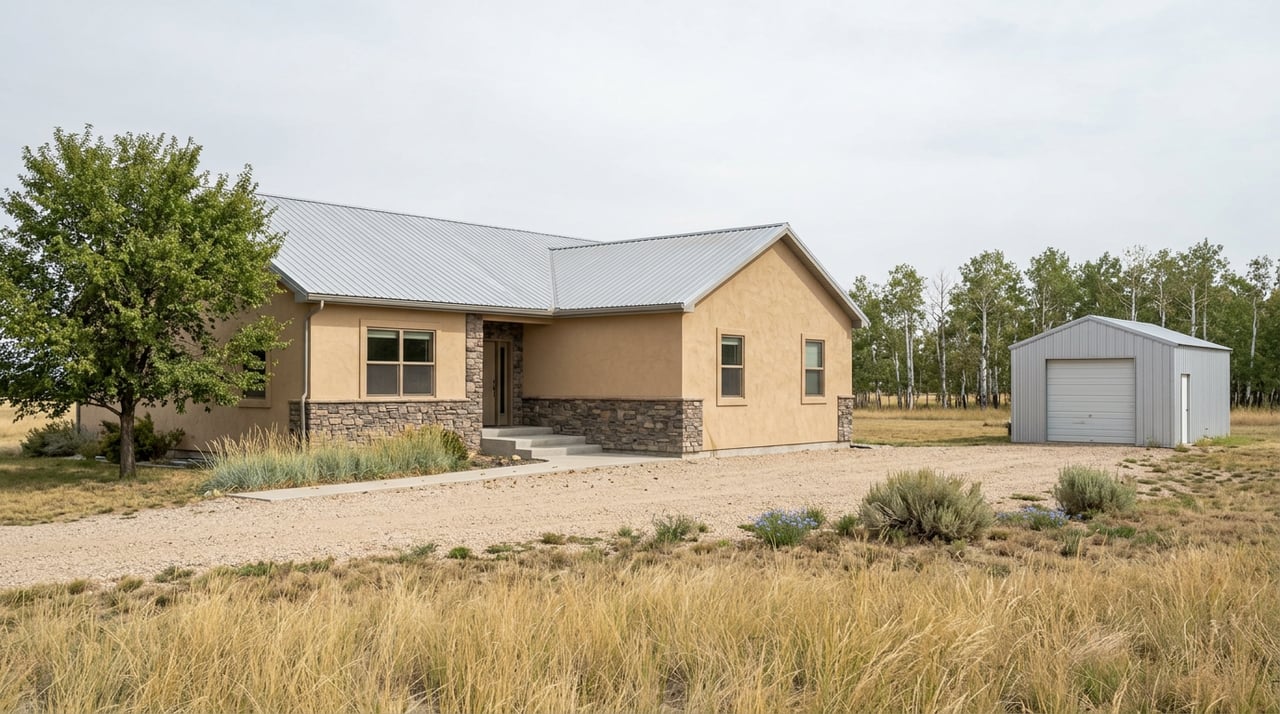
Scroll through listings in the Hagerman Valley long enough and you will hit the word geothermal more than once. A remodeled Victorian on four acres. A river-view home with a heated sidewalk. A 77-acre spread with greenhouses and a soaking pool. All marketed as geothermal, and all meaning something slightly different underneath the marketing copy.
That difference is not cosmetic. In most of the country, geothermal is shorthand for a ground-source heat pump, an HVAC system that moves heat through buried pipes and costs money to install but nothing extra to license. In Hagerman, geothermal can also mean something else entirely: naturally occurring hot water rising from the aquifer beneath the valley, tied to a water right that is a separate piece of legal property from the house sitting on top of it. One version is a mechanical system you buy from a contractor. The other is a water right you have to verify at the county and the state before you can be sure it survives the sale.
Buyers who assume they are getting the first thing and are actually getting the second one are the ones who run into trouble three weeks before closing.
Two systems, one word
The confusion is understandable because both systems get called the same thing in casual use, and both show up in Hagerman-area listings.
| Ground-source heat pump | Natural artesian geothermal | |
|---|---|---|
| What it is | Engineered HVAC system using buried loops | Naturally hot water from the aquifer |
| How you get it | Installed by a licensed contractor | Tied to a water right filed with the state |
| What transfers at sale | Equipment, like any HVAC system | A separate legal water right, not automatic |
| Idaho Power rebate available | Yes, $1,000 to $3,000 for qualifying systems as of March 2026 | No, this is not an HVAC installation |
| Risk if unused for years | None, equipment just sits idle | Can be forfeited under state law |
The valley sits on the discharge zone of the Eastern Snake Plain Aquifer, the same geology that feeds the springs at Banbury Hot Springs, a resort that has drawn artesian mineral water out of the ground since a man named John Banbury built a hotel and bathhouse there in 1920. Water at that spring surfaces around 138 degrees before it is cooled for the pool. That is the same category of resource some Hagerman-area homes use to heat radiant floors, warm a pool, or run a greenhouse. It is not a system you install. It is water you have rights to, or you don't.
The right that doesn't ride along with the deed
Idaho treats water as a form of property separate from the land it sits under. That rule applies whether you are talking about irrigation water, a domestic well, or the hot artesian water that shows up in Hagerman listings. A deed transferring the house does not automatically transfer the water right that heats it. The purchase agreement and the recorded transfer documents have to say so explicitly, and if they don't, you can close on a house with a geothermal system that has no legal water behind it.
This is not a hypothetical. Listings in the valley have included specific Idaho Department of Water Resources right numbers attached to the sale, along with shares in the Banbury Pipe Company, the local entity that distributes some of this hot water for domestic use. Those shares and rights are named line items precisely because they do not travel with the property by default. A buyer who skips verifying them is trusting that everyone upstream did the paperwork correctly, which is a bet, not a fact.
The state's own water right search tool lets anyone look up a specific right by number, owner, or parcel. If a listing advertises geothermal heat and doesn't name a water right, that absence is worth a direct question before you write an offer, not after.
The five-year clock nobody mentions in the listing photos
Idaho law requires that a water right actually be put to beneficial use. If it sits unused for five consecutive years, all or part of it can be forfeited under Idaho Code section 42-223, opening it up to appropriation by someone else in line. This applies to irrigation rights and it applies to the hot water rights tied to Hagerman's geothermal homes.
That means a seller who inherited a property with a documented geothermal water right, but who has not run water through the system in years because the previous system failed or the house sat vacant, may be sitting on a right that has already weakened or lapsed before the home ever goes on the market. Idaho water attorneys who work through forfeiture issues note that the fix, filing for an extension or resuming use and documenting it, has to happen before the five-year window closes, not after a buyer discovers the problem during due diligence.
For a buyer, this changes the question from does this home have geothermal heat to when was this water right last used, and can that be documented. For a seller, it means the smart move is confirming continuous use well before listing, not waiting for a buyer's attorney to ask.
What actually needs checking before you write an offer
If you are looking at a Hagerman-area property that markets itself as geothermal, here is the sequence that matters more than the marketing language.
- Ask whether the listing means a ground-source heat pump or naturally hot artesian water. These are not interchangeable and the answer changes everything else on this list.
- If it is artesian water, get the specific IDWR water right number and search it directly through the state's water right database rather than taking a listing description at face value.
- Confirm whether the right is appurtenant to the land or held separately, and whether the purchase agreement and deed language explicitly include it in the sale.
- Ask when the right was last put to beneficial use and whether there is documentation, since a right that has sat idle for close to five years carries forfeiture risk.
- If the property includes shares in a distribution entity like the Banbury Pipe Company, confirm those shares transfer with the sale and are not held separately by the seller.
- If anyone plans to drill a new well in an active thermal zone, note that IDWR classifies wells between 85 and 212 degrees as Low-Temperature Geothermal resource wells, which can carry a state bonding requirement between $5,000 and $20,000 depending on depth. That is a drilling company's obligation, but it affects timeline and cost if new development is part of your plan.
- Loop in a title company or water rights attorney early. This is not a step to save for after inspection.
None of this means geothermal homes in Hagerman are a bad idea. The valley's geology is genuinely unusual and the properties built around it, from working farms with greenhouses to river homes with heated floors, take advantage of a resource most of the country doesn't have access to. The point is that the word on the listing sheet is doing two jobs, and only one of them comes with a state-issued right that has to be verified line by line.
A few questions worth asking
Does every geothermal listing in Hagerman involve a water right? No. Some homes use a standard ground-source heat pump, which is mechanical equipment with no separate water right attached. Always ask which system a specific listing means before assuming either way.
If I am financing the purchase, does a lender care about any of this? A lender's appraisal is focused on comparable value, not water law. That means the burden of verifying water right status typically falls on the buyer and their agent or attorney, not the loan process itself. Treat it as its own due diligence track alongside inspection and appraisal.
What if the seller can't produce documentation on the water right? That is a reason to slow down, not walk away automatically. Missing paperwork is common with older Hagerman Valley properties, and the fix is usually a title search combined with a direct records request to IDWR before you remove contingencies.
Buying or selling a property in the Hagerman Valley with a geothermal water right attached is entirely doable. It just rewards the buyer or seller who treats the water the same way they treat the house, as something worth verifying in writing. If you are weighing a purchase or a listing where geothermal water is part of the story, Logan Robinson can walk through what documentation to ask for before you're under contract. If you're on the selling side and want a clear read on where your property stands, start with a free home valuation.